The Xylophone
Robot
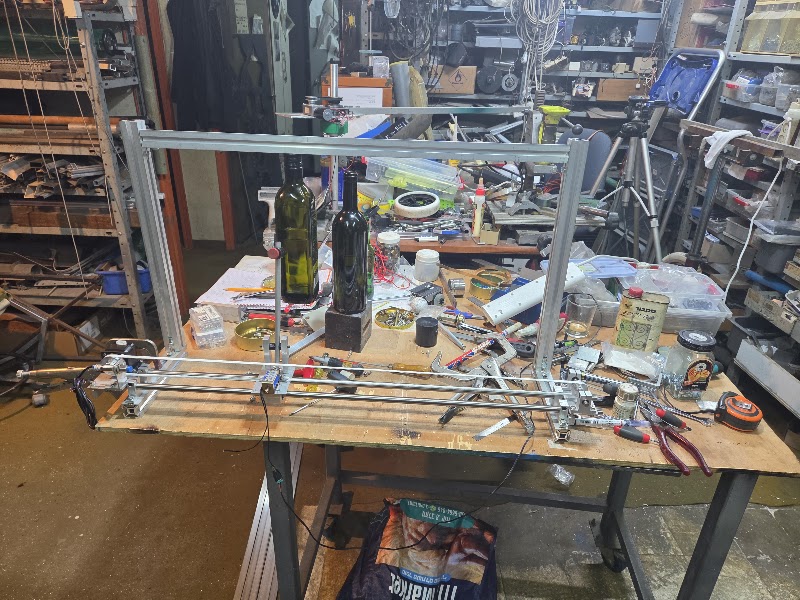
A machine that plays a row of glass bottles like a xylophone. The bottles hang from the frame. A belt-driven carriage runs along steel rails beneath them, stops at the right bottle, and a solenoid flicks a striker against it.
Move, stop, strike
-
01 · home
Find zero
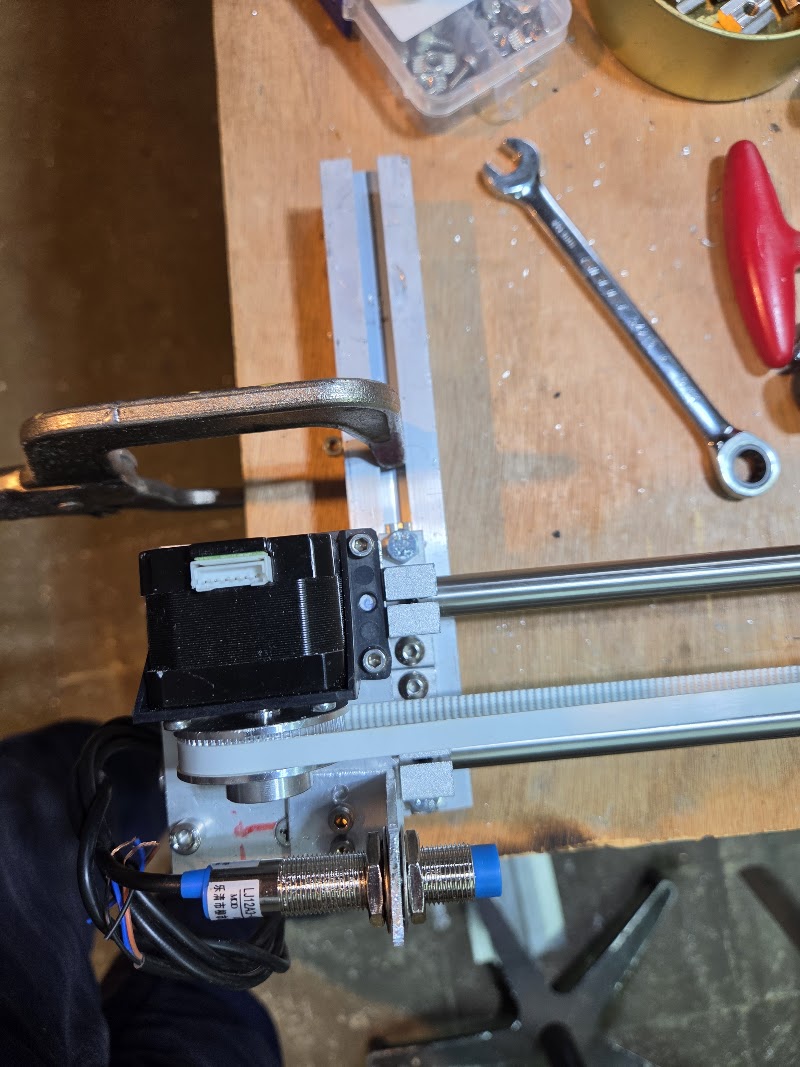
On power-up the carriage creeps toward the motor end until the inductive sensor sees it. That point becomes position zero.
-
02 · travel
Drive to the bottle
The stepper turns the timing-belt pulley a counted number of steps, which puts the carriage at the bottle for the next note.
-
03 · strike
Fire the solenoid
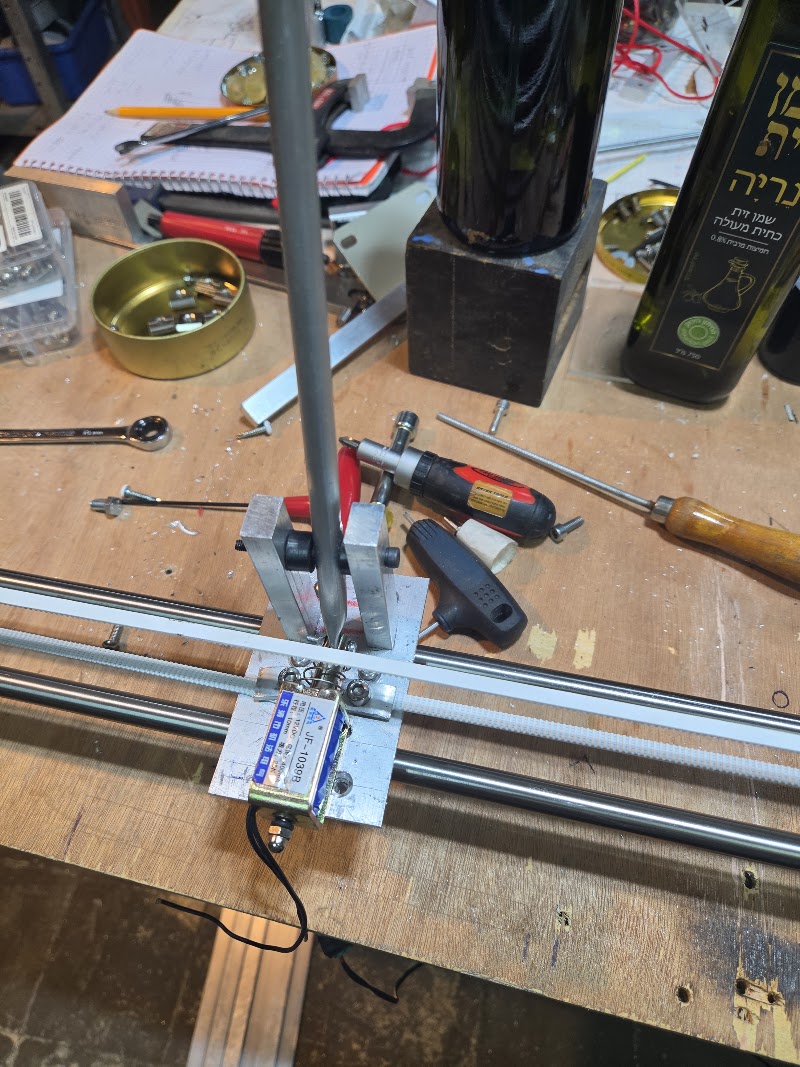
A short pulse snaps the striker against the glass and lets it fall back. Hanging free, the bottle rings on instead of being damped.
On the bench
Assembling the carriage on the rails, with the gantry already up and the first bottles on the bench.
Parts on the bench
- Instrument
- Glass bottles, one per note, hanging in a row from the gantry
- Frame
- Aluminum extrusion base on a plywood bench, with an aluminum-tube gantry above
- Guides
- Two parallel ground-steel rods with linear bearings
- Drive
- NEMA 17 stepper motor and a toothed timing belt
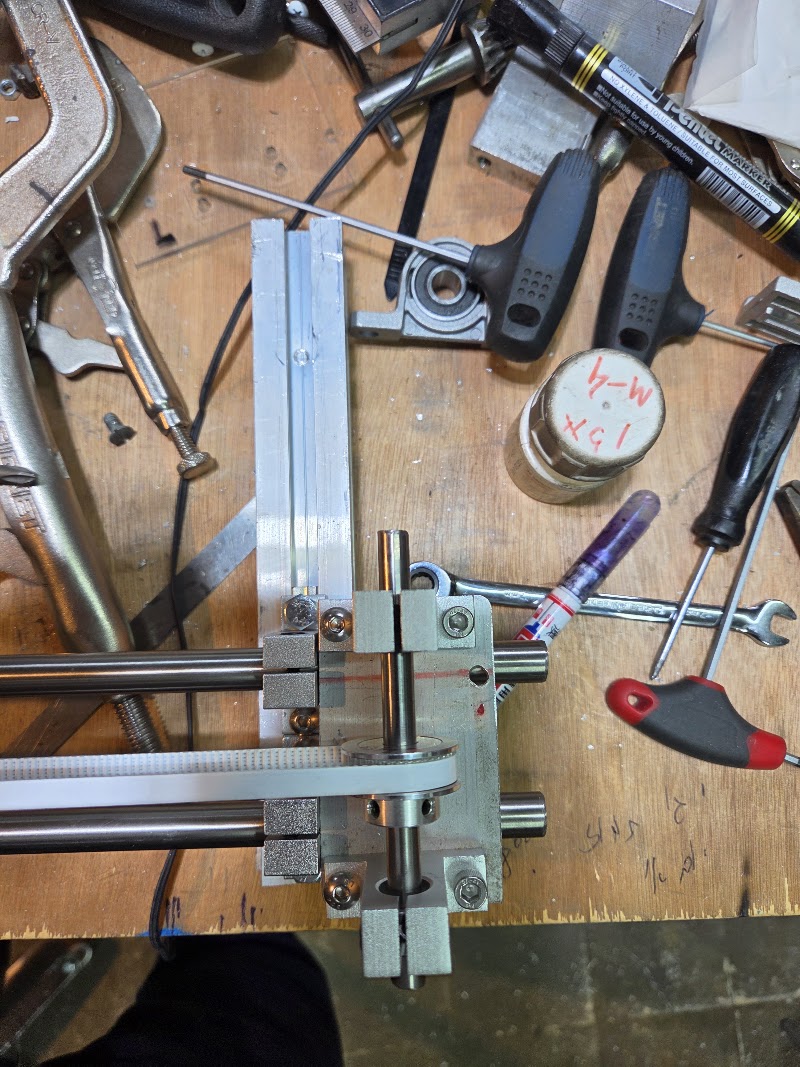
- Belt return
- Idler pulley on a shaft held in split clamp blocks
- Striker
- Push-pull solenoid
JF-1039Bon the carriage - Homing
- Inductive proximity sensor
LJ12A3(12 mm barrel)
From the workshop
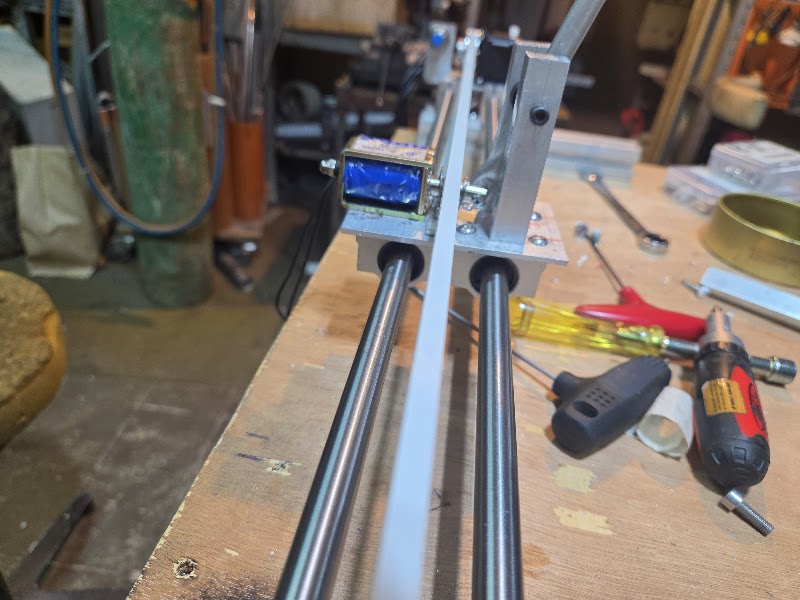
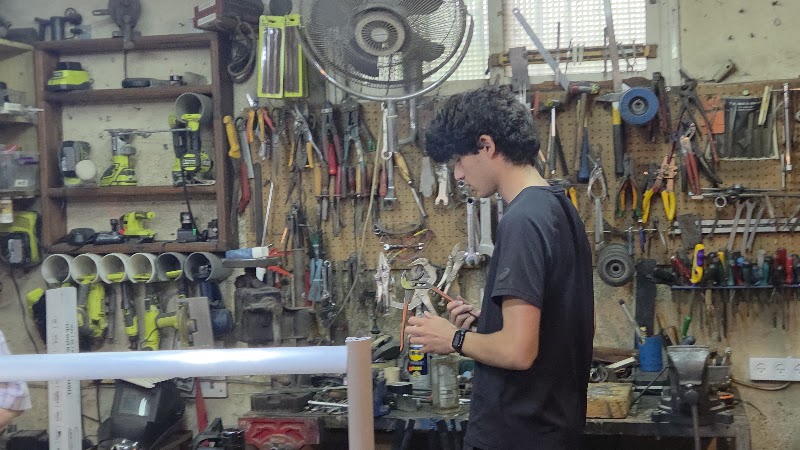
The mechanics are assembled and the carriage moves. Next: a full row of tuned bottles, firmware that turns a melody into positions and strikes, and the first full song.